
 En
En  TH
TH 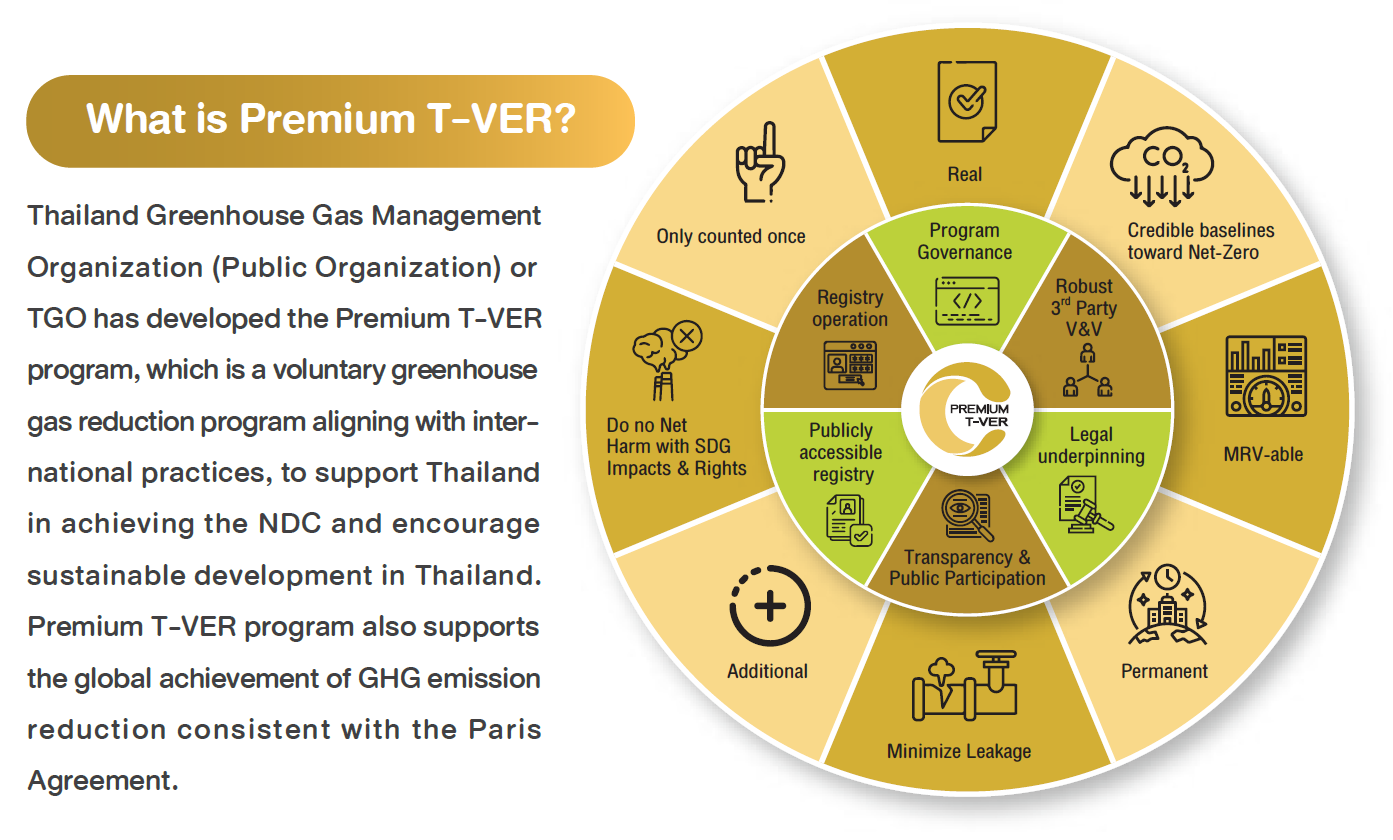
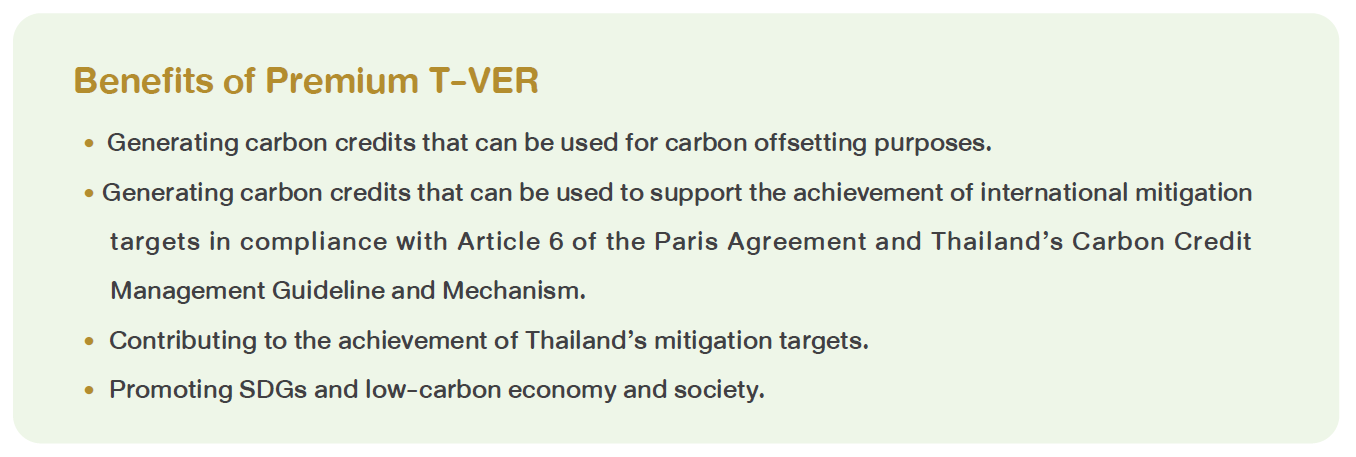
In order to ensure that the carbon credits are of high quality, six basic principles shall be considered in the planning and implementating of Premium T-VER projects including calculation, monitoring, and verification of GHG emission reductions for creating confidence in the quality of Premium T-VER carbon credits. The six basic principles consist of :
Relevance means that the selection of GHG sources, GHG sinks, GHG reservoirs, data and methodologies are appropriate to the needs of the intended users and reflects GHG emission reductions occurred within the project boundary or related to the project.
Completeness means that all relevant GHG emissions and removals and information to support the criteria and procedure are included.
Consistency means that data collections and calculations of GHG emission reductions shall enable meaningful comparisons with GHG related information
Accuracy means that data collections and calculations of GHG emission reduction are correct, credible, and acceptable in order to reduce biases and uncertainties as far as is practical.
Transparency means that sufficient, appropriate and verifiable GHG-related information is disclosed in order to allow intended users to make decisions with reasonable confidence.
Conservativeness means that conservative assumptions, values and procedures shall be used in order to ensure that GHG emission reductions or removal enhancements are not over-estimated.
Any project that can be registered as a Premium T-VER projects shall have the following characteristics:
1) The project is located in Thailand.
2) The amount of GHG emission reductions of the project activities can really be measured.
3) Reduction of GHG emissions or removals shall be permanent and additional to those that would have occurred in the absence of the project activity or business as usual (BAU).
4) No double counting is allowed.
5) Project activities shall foster sustainable development.
6) Project activities shall not negatively impact the natural environment or local communities and do no net harm.
The Premium T-VER program will cover 7 types of GHGs:
1. Carbon Dioxide (CO2)
2. Methane (CH4)
3. Nitrous oxide (N2O)
4. Hydrofluorocarbon (HFC)
5. Perfluorocarbon (PFC)
6. Sulfur hexafluoride (SF6)
7. Nitrogen trifluoride (NF3)
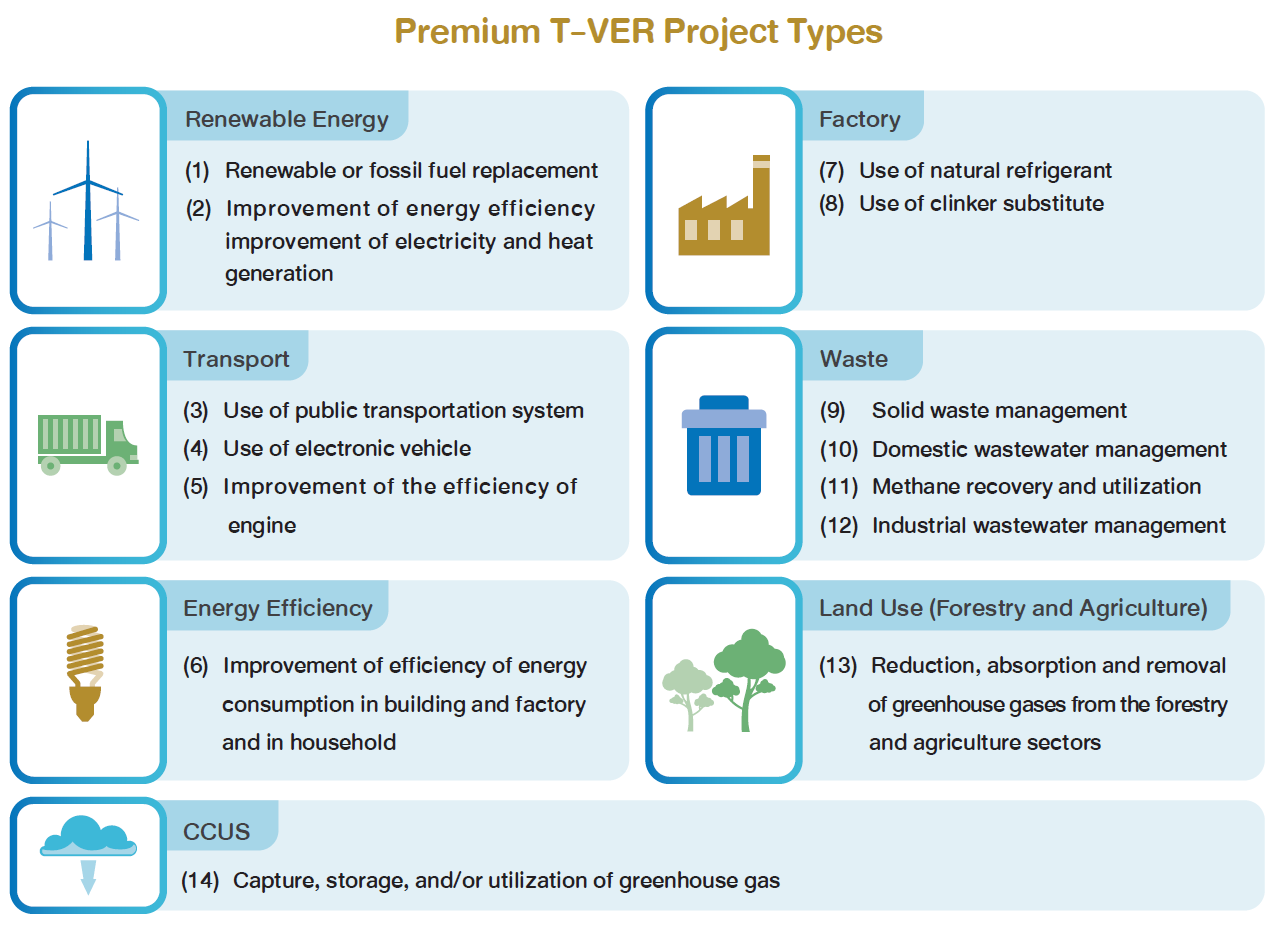
Projects that can participate in the Premium T-VER program must fall under the following project types.
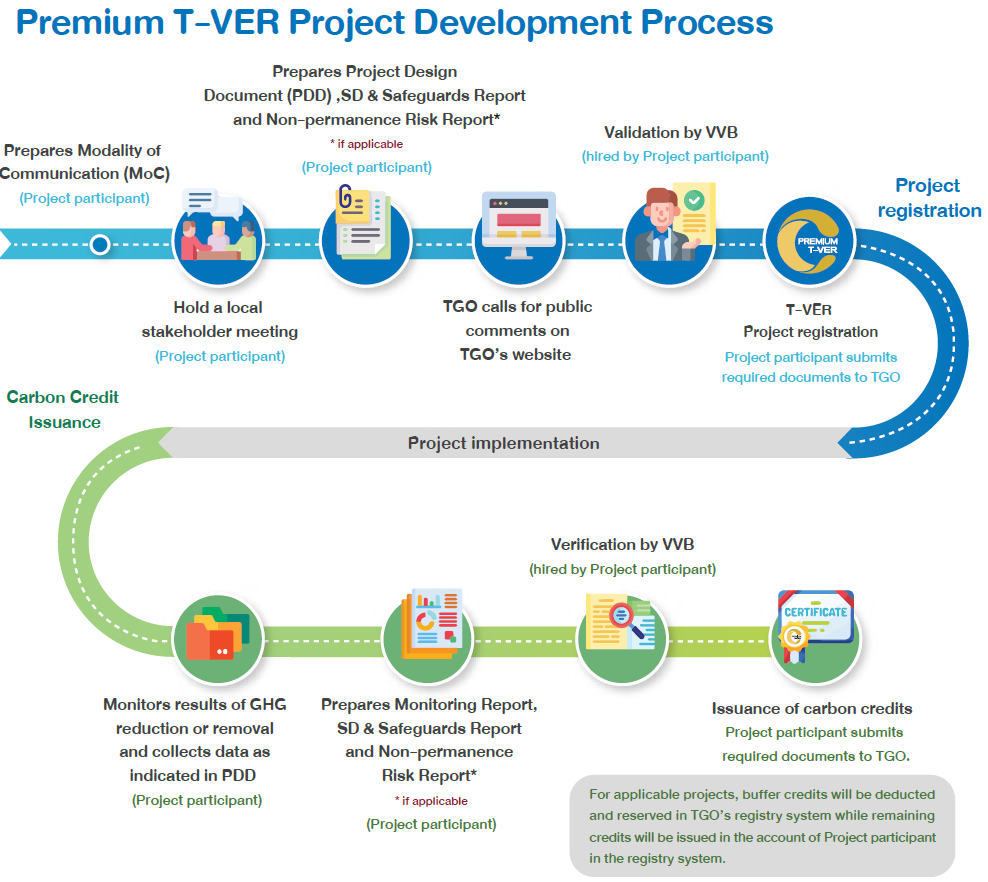
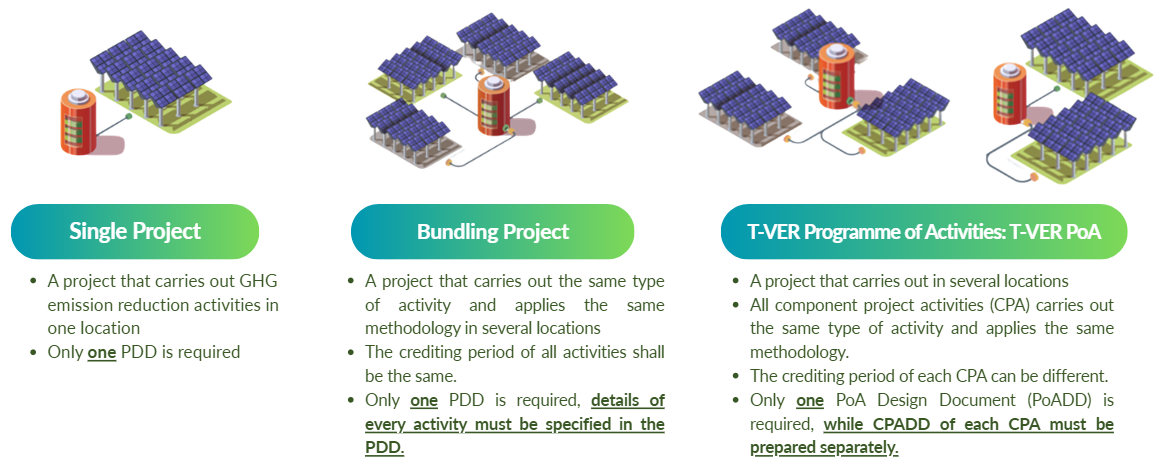
Development of the Premium T-VER project can be categorized into 3 models as follows:
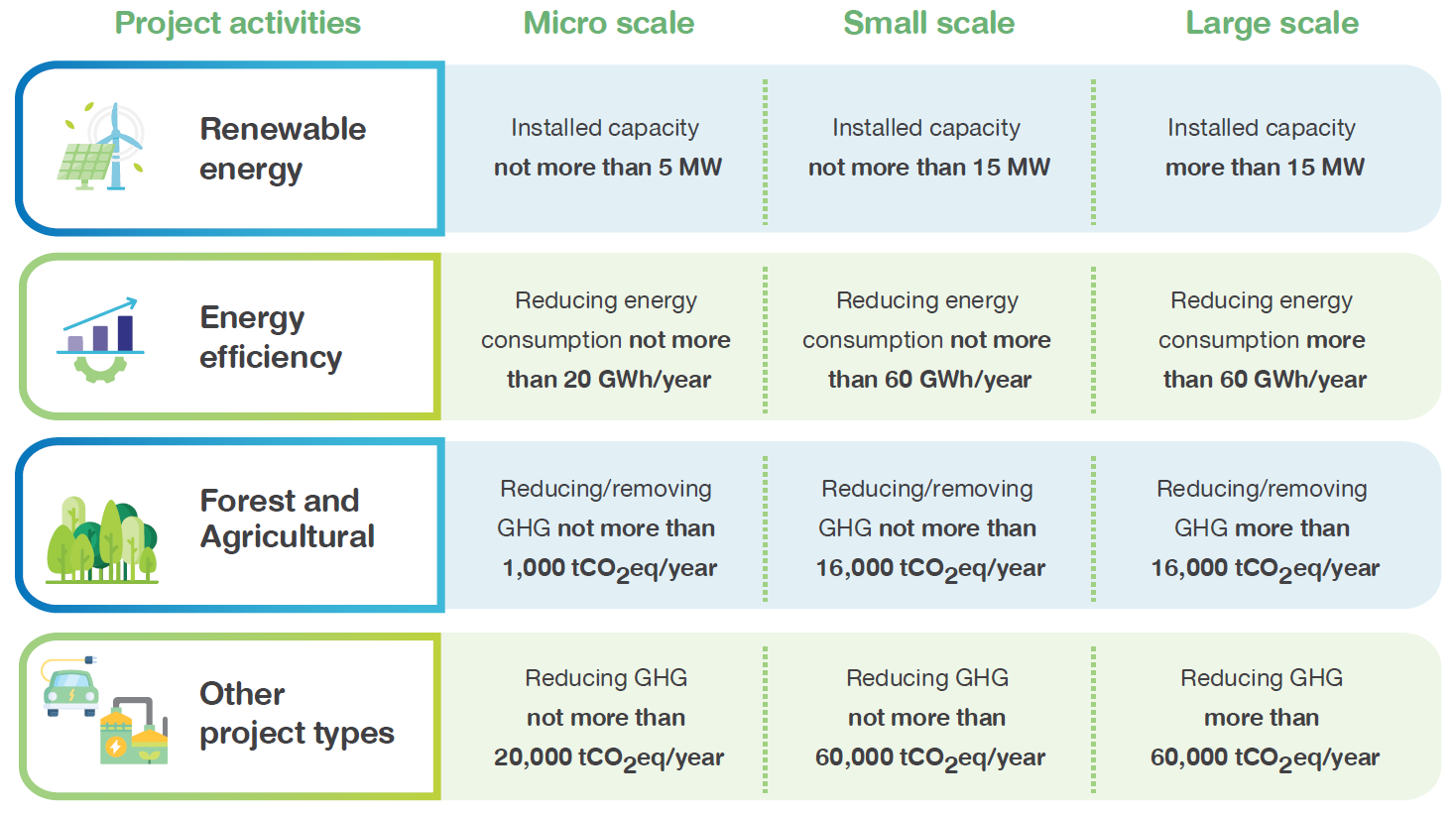
The project size is categorized by the amount of expected GHG reductions/removal or capacity of the project as listed in the table below:
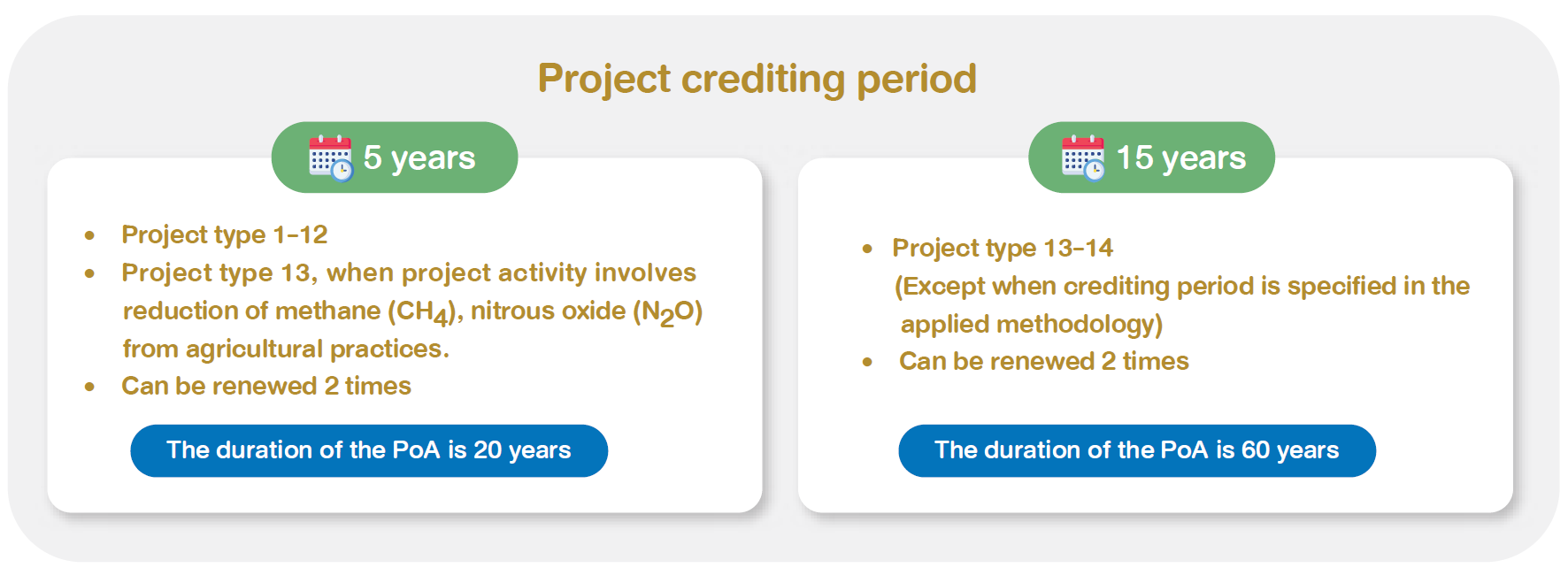
Crediting Periods of single and bundling projects, PoA and CPA are as follows:
Further details are available in the Guideline for Premium T-VER below.
Guidelines_for_Premium_T-VER_V.06